Coverly
My approach to AI that shows its source.
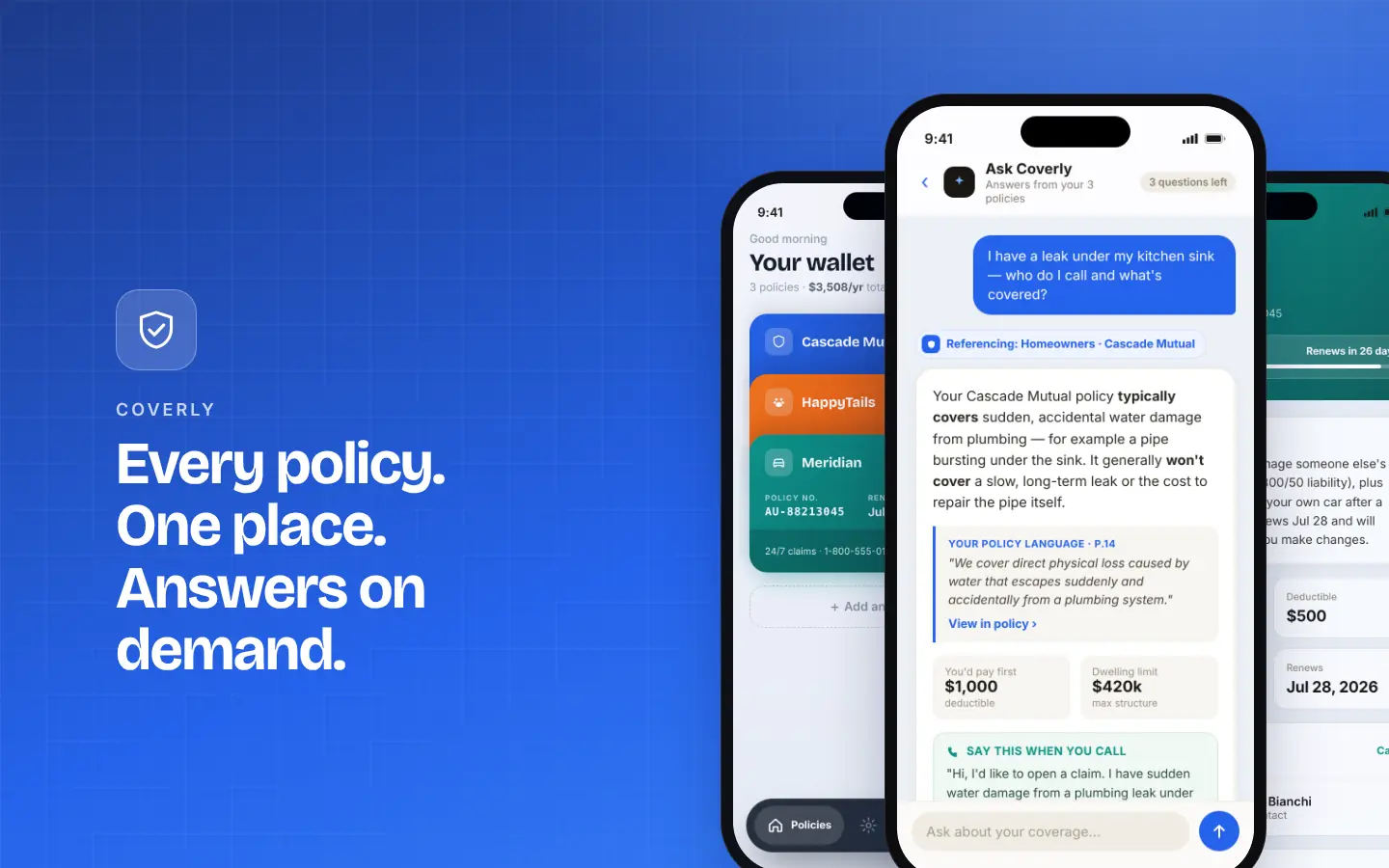
I designed and built Coverly, a mobile wallet for every insurance policy. Explore my approach to reading documents into fields people confirm, answers that quote the page they came from, and renewal reminders that keep the next date visible.
- Expo
- React Native
- TypeScript
- Expo Router
- Claude API
- Document extraction
- Camera & PDF capture
- On-device encryption
- Face ID
- Push notifications
- RevenueCat
- EAS Build
My contribution and decisions
I designed and built Coverly end to end: capture and document extraction, the review step, the wallet and policy pages, cited answers, renewal reminders, Face ID and the subscription.
The central decision is that the AI never has the last word. Extraction is handed back for review with its uncertain fields marked, and every answer quotes the policy language and page it relied on, so a person can check it before acting on it.
What it does
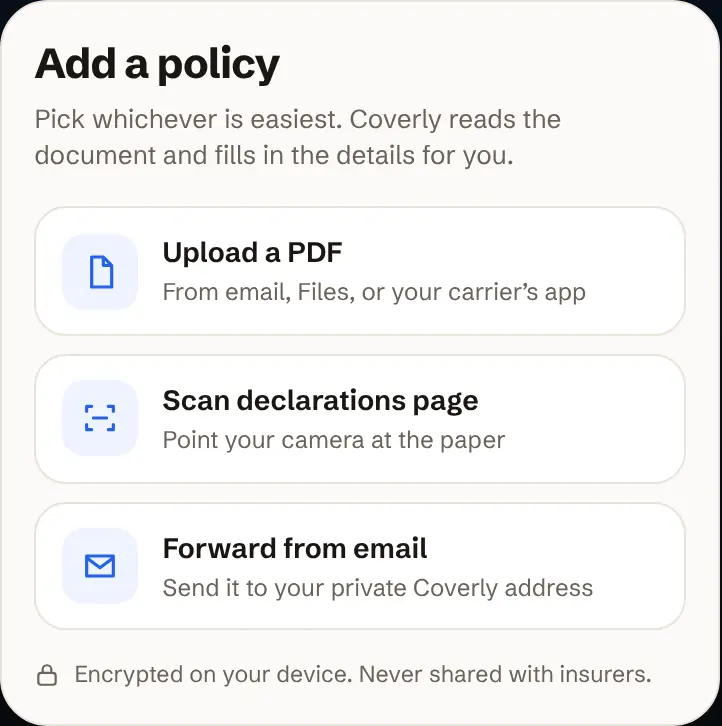
From paperwork to fields you can check.
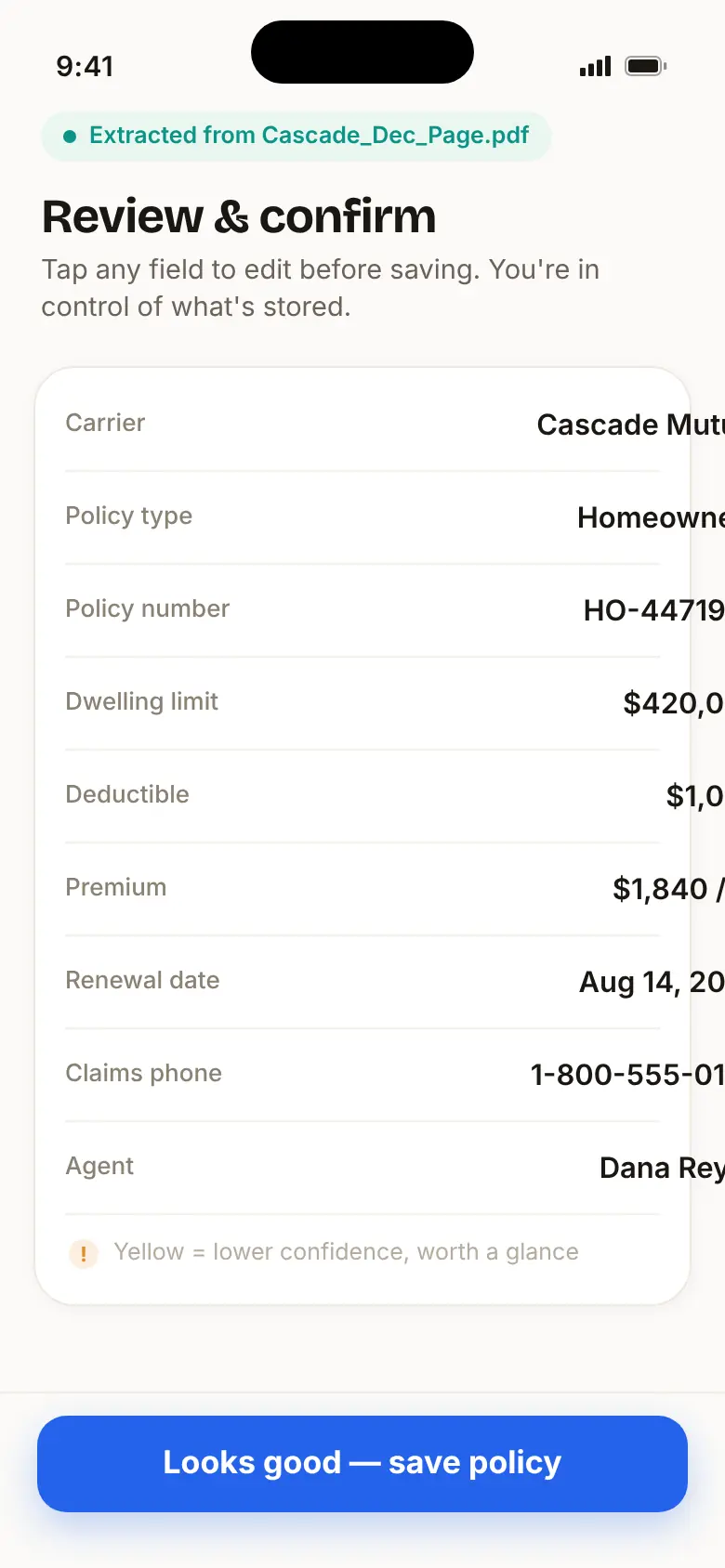
Upload a PDF, scan the paper or forward the email. Coverly reads the declarations page field by field, then hands it back for review, with anything it’s less sure of marked in amber. Try it.
- Carrier, limits, deductible, premium, renewal and contacts
- Lower-confidence fields flagged for a second look
- Nothing is saved until you confirm
Answers that show their source.
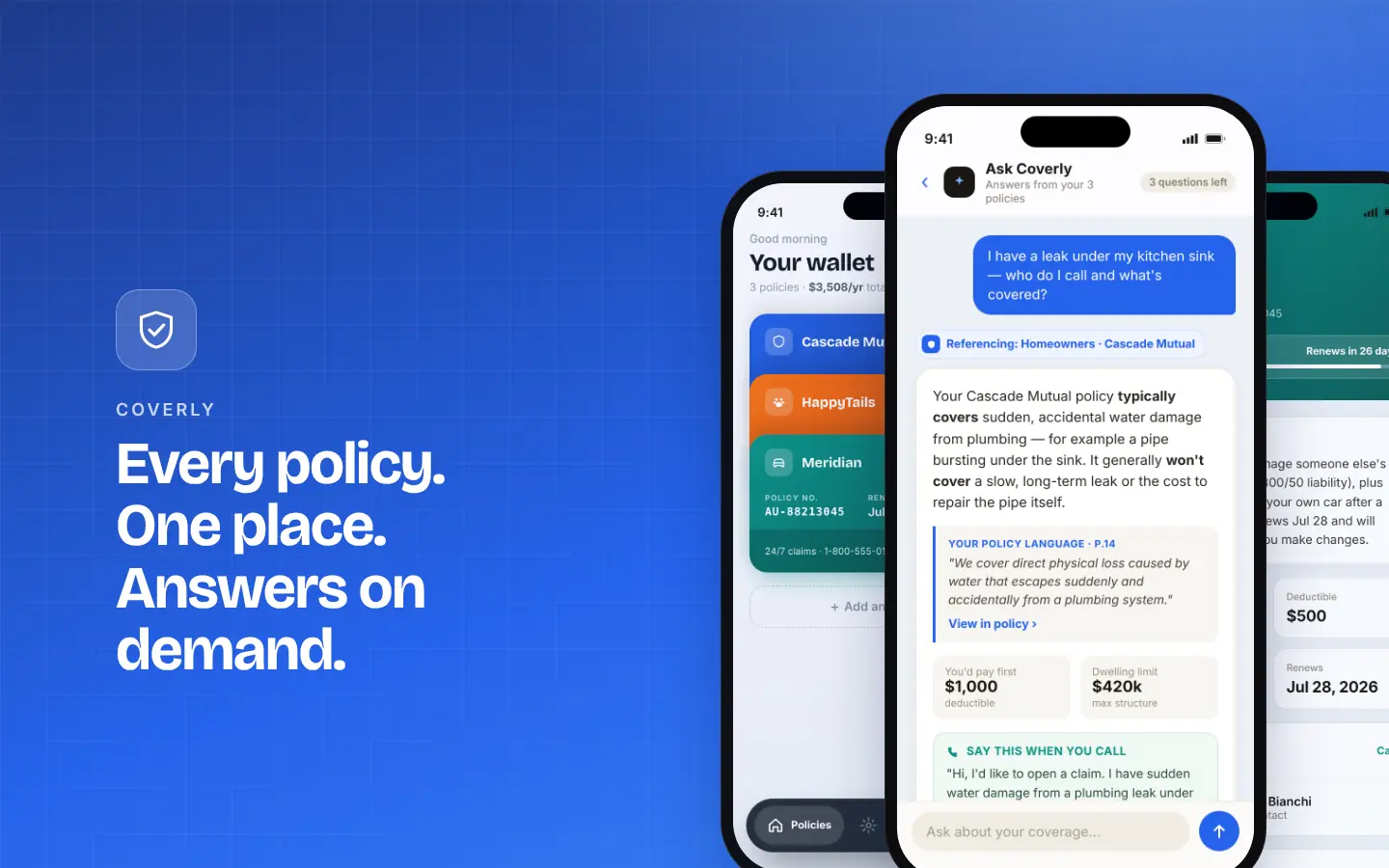
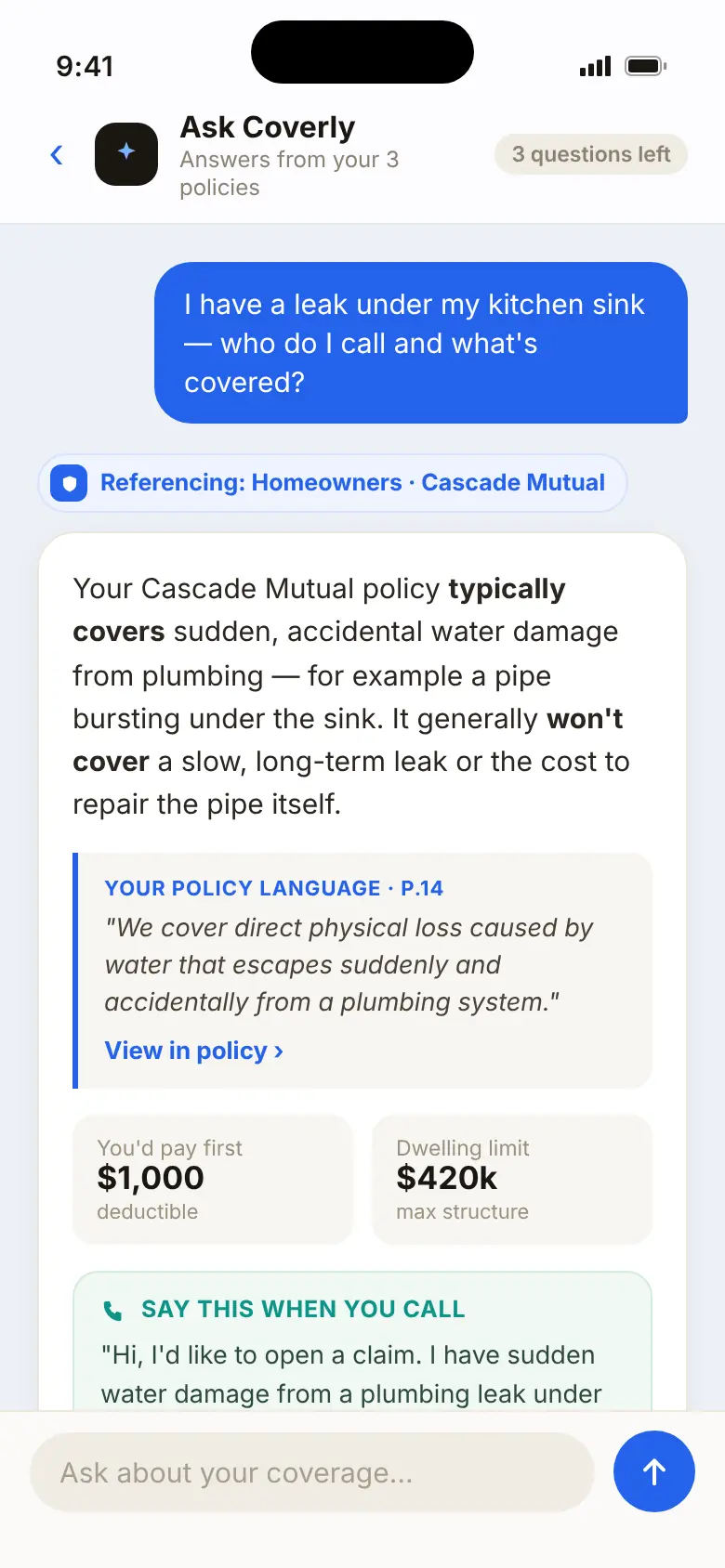
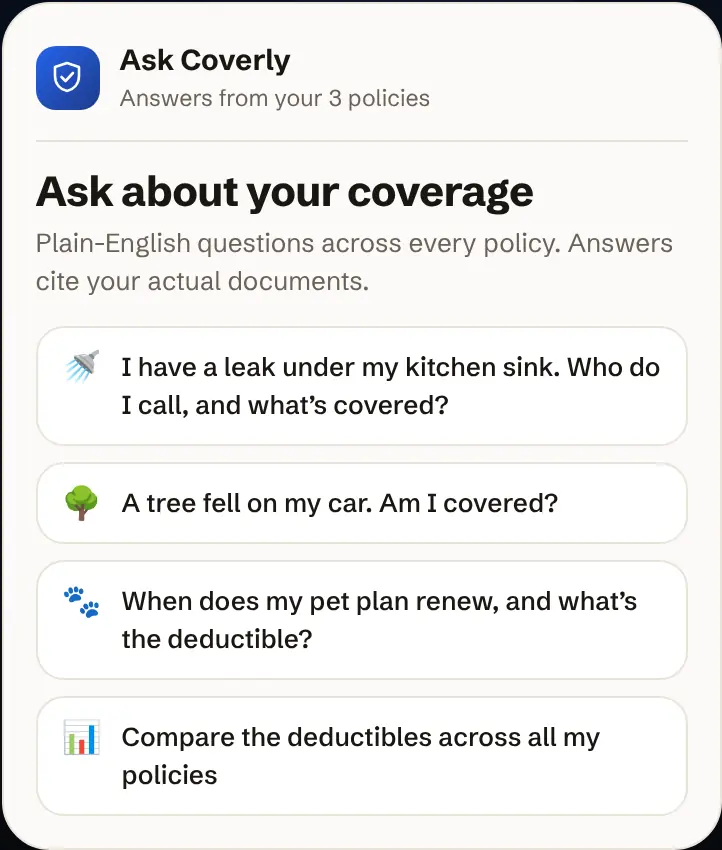
Ask a plain question across every policy. The answer names the policy it used, quotes the language and page, pulls out the numbers that matter and, for a claim, gives you the number to call and what to say. Try it.
- Every answer cites your own documents
- Deductibles and limits pulled out as numbers
- A script ready for the claims call
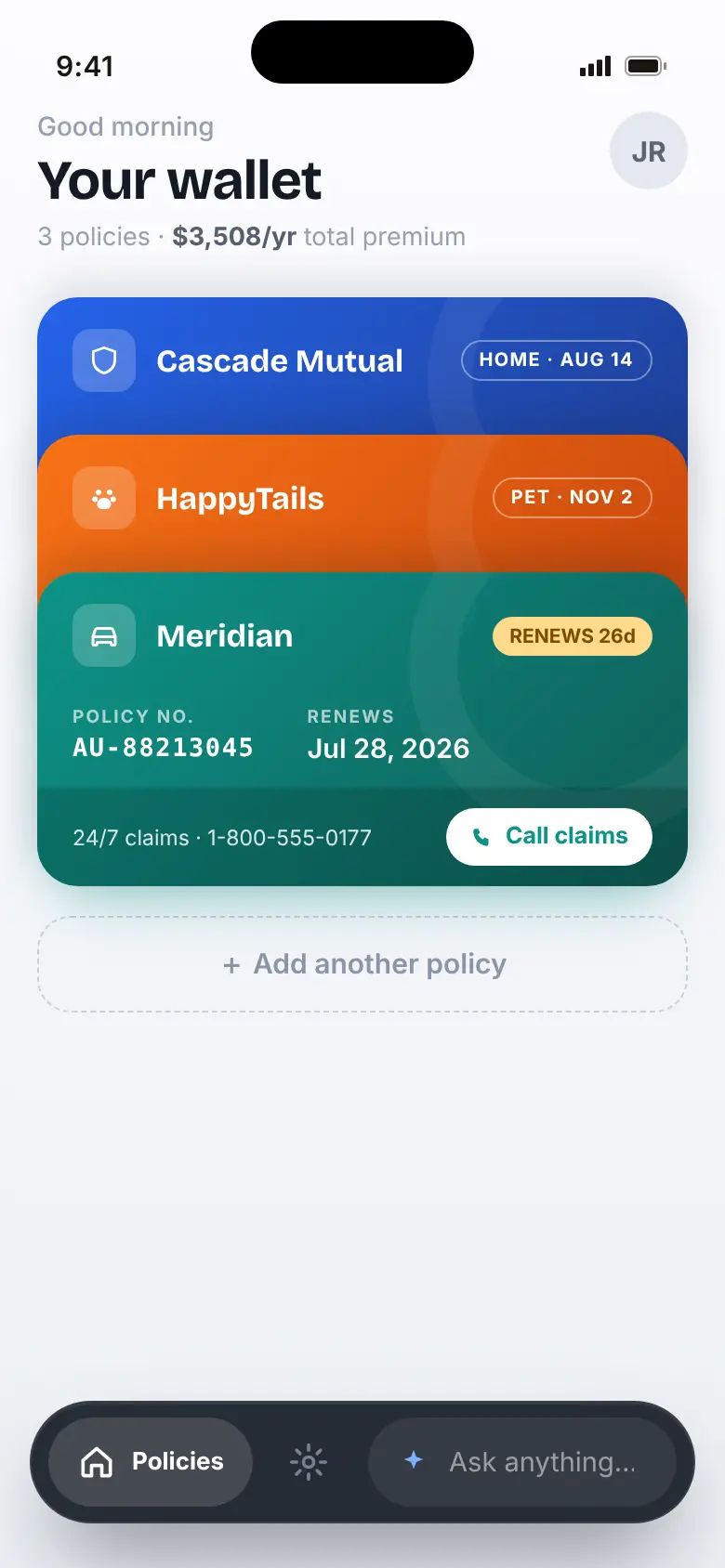
Every policy in one stack.
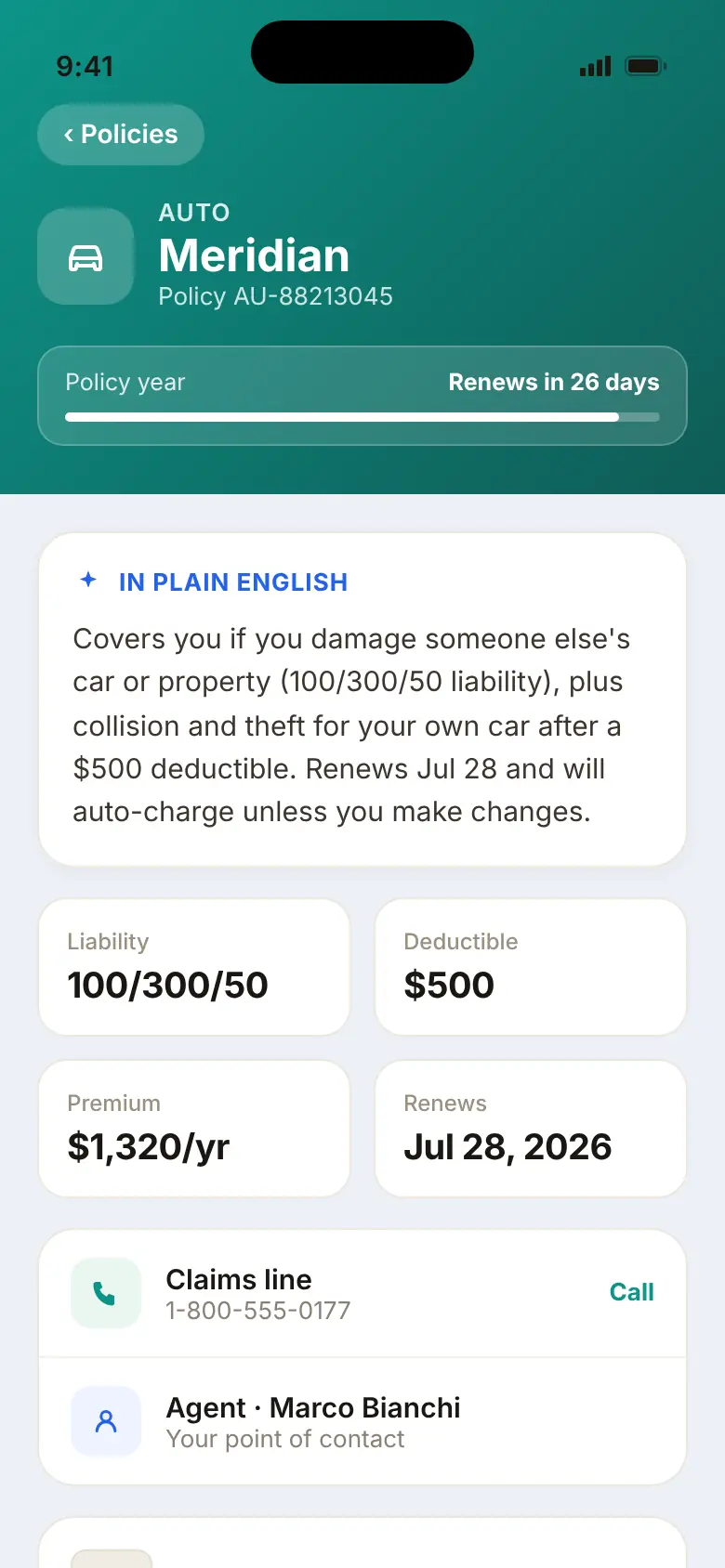
Policies sit together like passes in a wallet, each in its own color, with the next renewal and the total yearly premium at the top. The one renewing soonest opens first, with its claims line one tap away.
- Home, auto, health, life and pet side by side
- Total premium across every policy
- Call claims straight from the pass
What you’re covered for, in a paragraph.
Each policy opens with a short explanation of what it pays for and what you pay first, then the four numbers worth knowing, the claims line, your agent and the original document.
- A summary written for people, not underwriters
- How far through the policy year you are
- The original document kept alongside
No more surprise auto-charges.
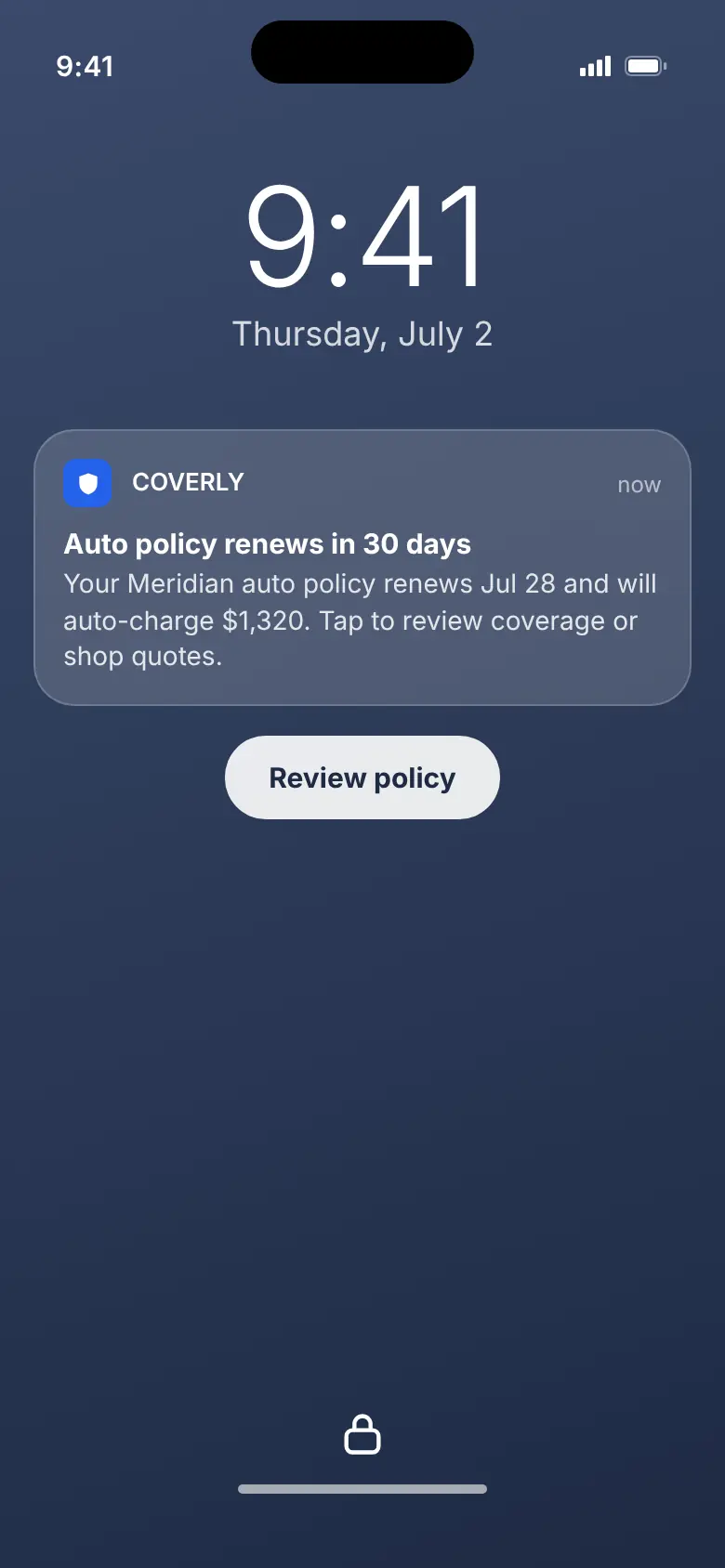
Thirty days before a policy renews, Coverly says when and how much will be charged, so there’s time to review the coverage or shop for quotes.
- A reminder for every policy
- The amount, not just the date
- Opens straight to the policy
Why it’s built this way.
How does Coverly read a policy?
From the declarations page: the summary page every policy has. AI pulls out the carrier, policy number, limits, deductible, premium, renewal date and contacts, then shows you every field to check. Fields it is less sure of are marked, and nothing is saved until you confirm.
Where do the answers come from?
Only from your own documents. Each answer names the policy it used and quotes the language and page, so you can check it yourself. It’s guidance, not a coverage decision; your carrier still decides claims.
What does it cost?
The free plan holds up to three policies and a few questions a month. Pro is $4.99 a month or $39 a year for unlimited policies and questions.
What kinds of insurance does it handle?
Home, auto, health, life and pet. Each gets its own pass in the wallet, its own plain-English summary and its own renewal reminder.
Who built it?
Nicholas Howell, designed and built end to end. It’s how I’d build your product, too.