Nemo
My approach to AI memory that travels between models.
I designed and built Nemo around AI memory you own. Explore my approach to importing history, distilling it into identities, and carrying a compact copy into any model.
- Next.js
- React
- TypeScript
- Zod
- Claude, OpenAI, Gemini & Grok APIs
- Conversation export parsing
- On-device encryption
- Vercel
- GitHub Actions CI/CD
My contribution and decisions
I designed and built the product end to end. My focus is making accumulated AI context something you own: kept in one place, organized by the people, companies and projects it describes, and readable in plain language.
The launch flow shows exactly what is being sent and how much smaller it is than the raw history, and nothing learned in a model is added back without review. Keeping identities encrypted on the device makes the boundary between what stays and what travels part of the interface.
What it does
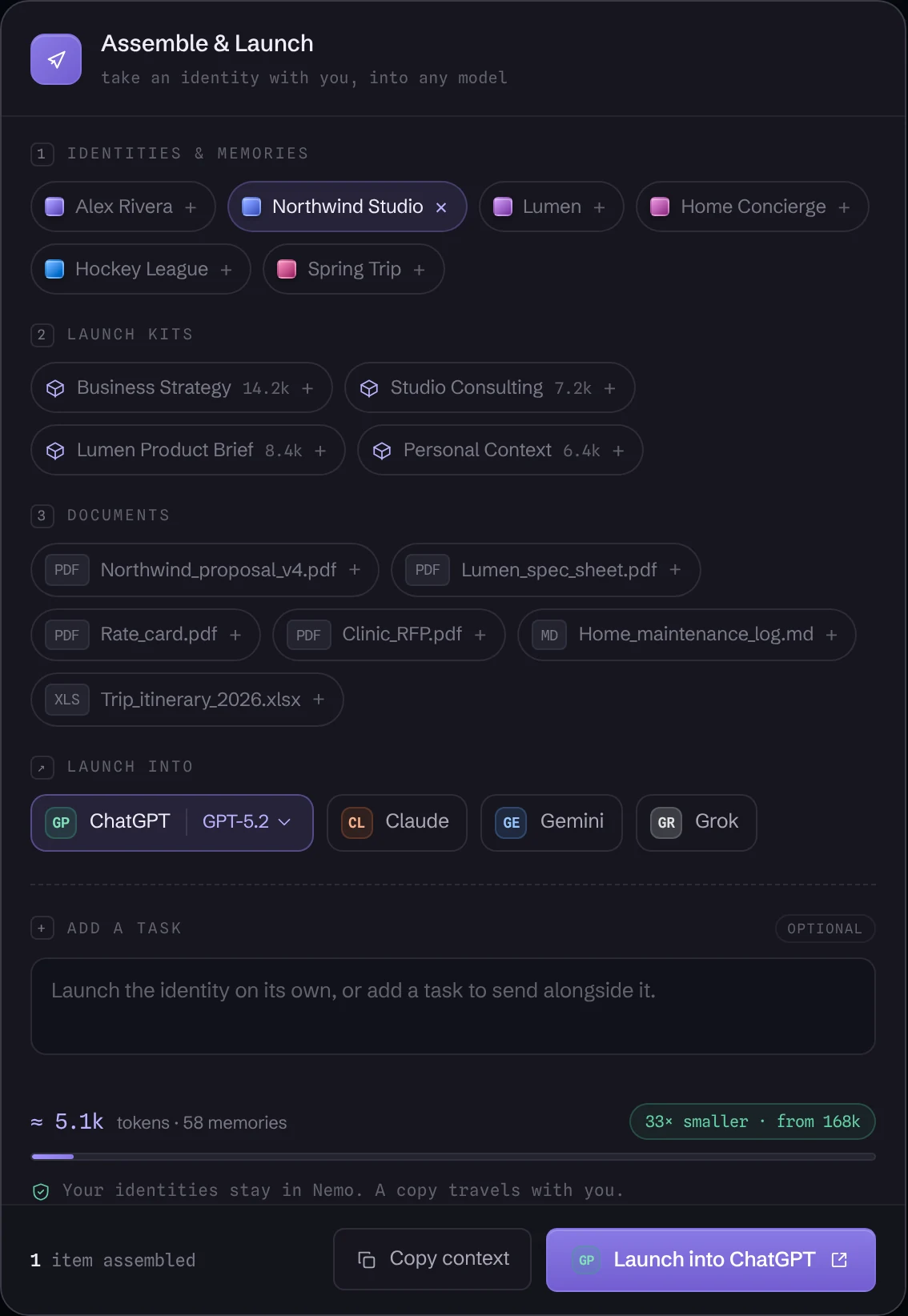
Take an identity into any model.
Pick identities, kits and documents, watch them compress into one small package, then launch into ChatGPT, Claude, Gemini or Grok. What you learn there comes back to Nemo. Try it.
- Hundreds of thousands of tokens of history, sent as a few thousand
- Any model, and any version of it
- New learning reviewed before it’s kept
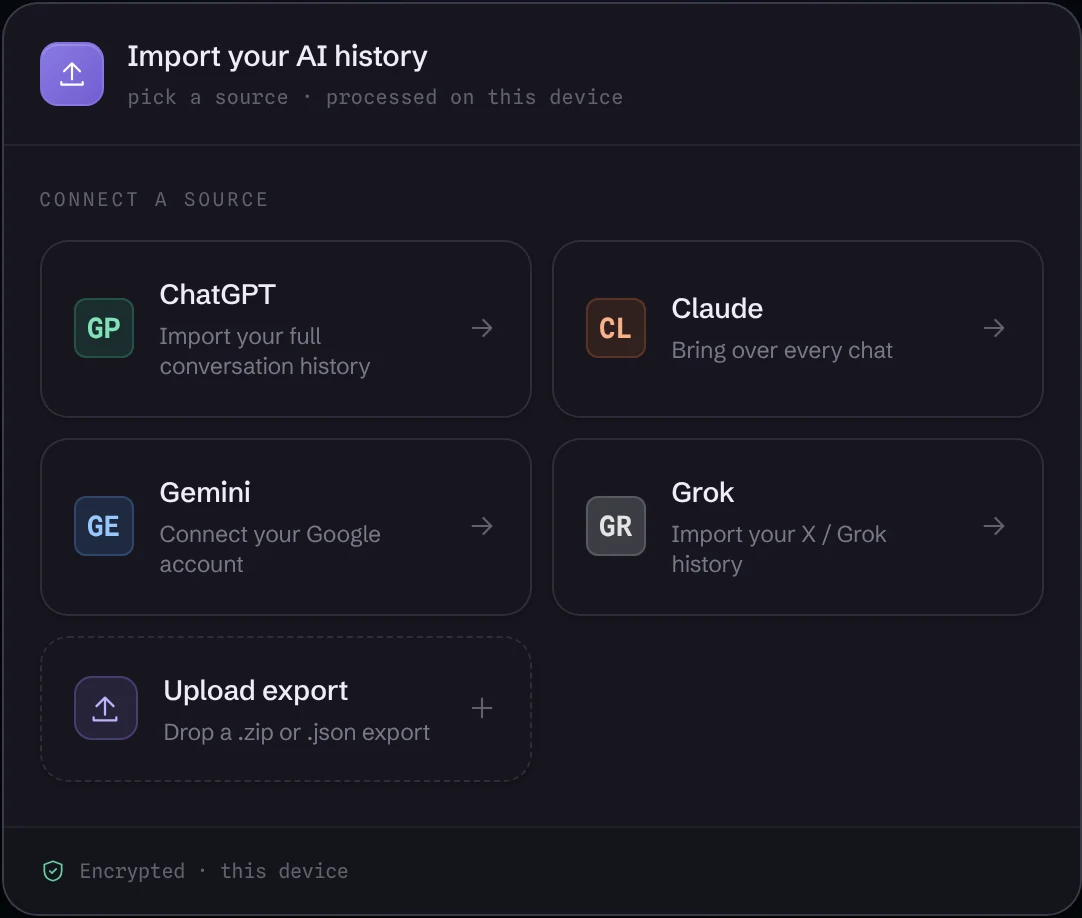
Bring your AI history with you.
Connect ChatGPT, Claude, Gemini or Grok, or drop an export. Nemo reads every conversation, distills the facts worth keeping and sorts them into identities. Try it.
- Conversations, memories and identities, counted as they land
- Processed and encrypted on your device
- Or drop in an export file
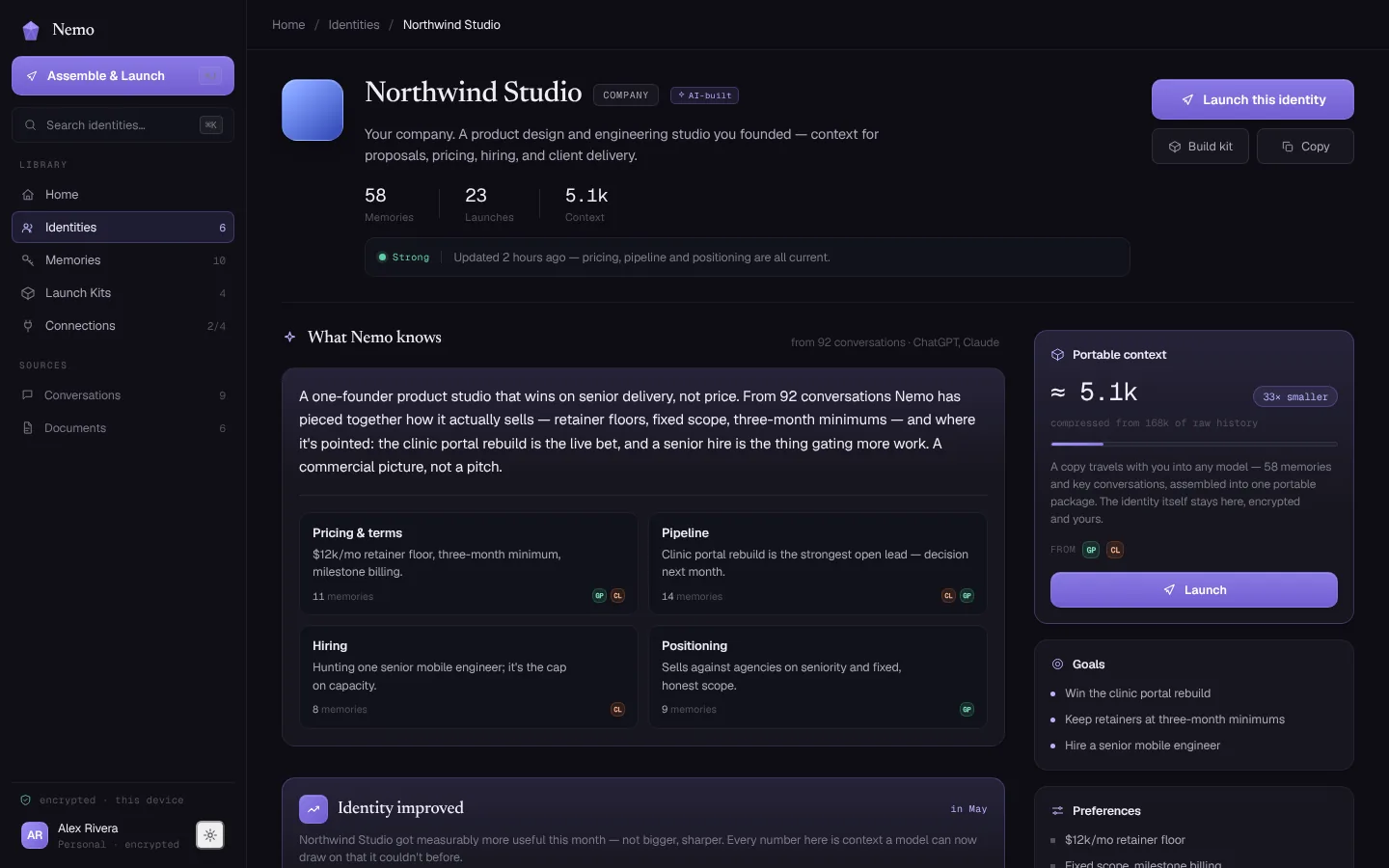
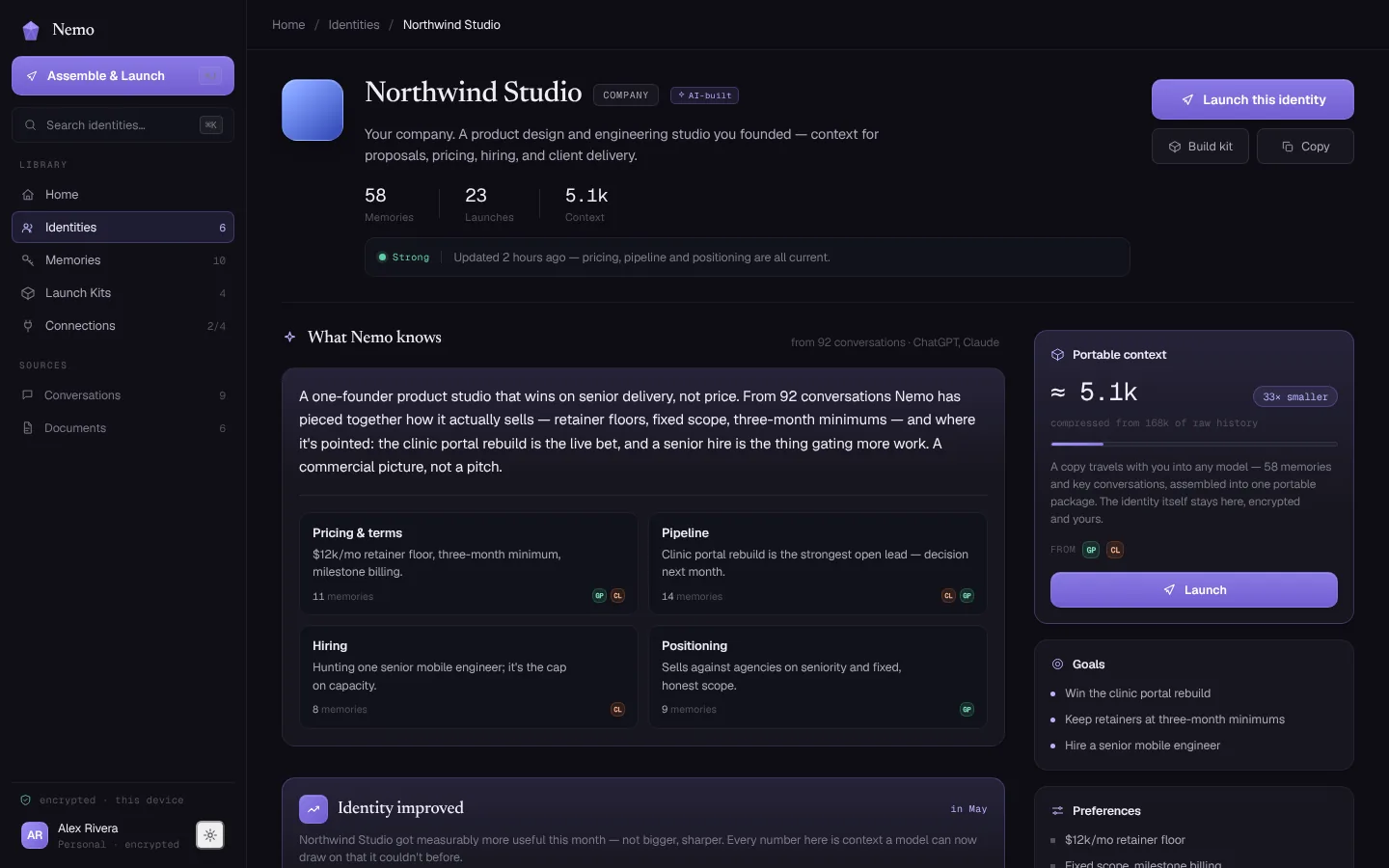
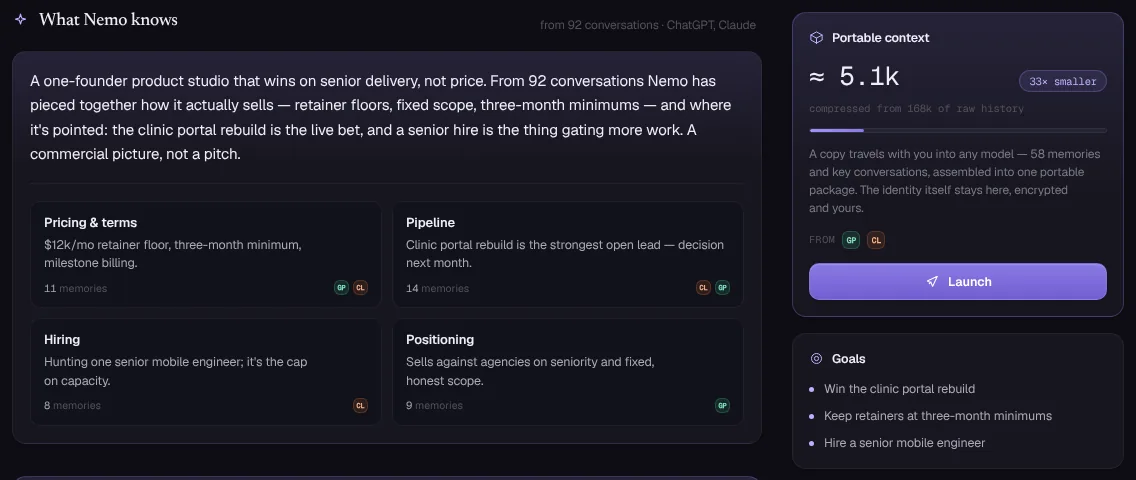
What Nemo knows, in plain words.
Each identity opens with Nemo’s own read of a person, company or project, then the themes it has pieced together, each with how many memories back it and which model they came from.
- A summary, not a list of facts
- Every theme traced to its sources
- Goals and preferences kept beside it
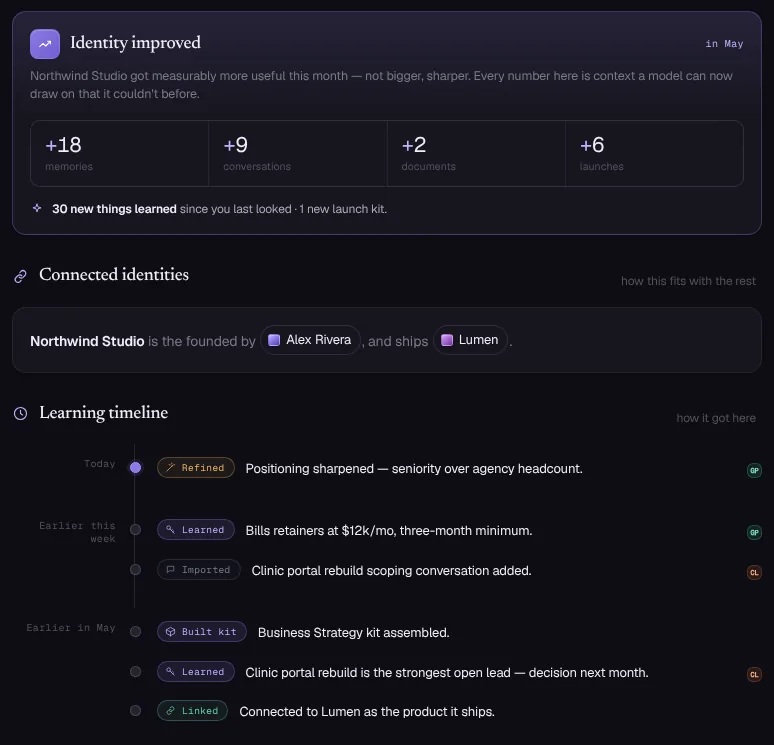
An identity that keeps getting sharper.
Every month Nemo shows what an identity gained, who it connects to, and a timeline of what it learned, refined, imported and built, so you can see how it got here.
- A monthly recap of new memories, conversations and launches
- Relationships written as a sentence
- A health line that says when one is going stale
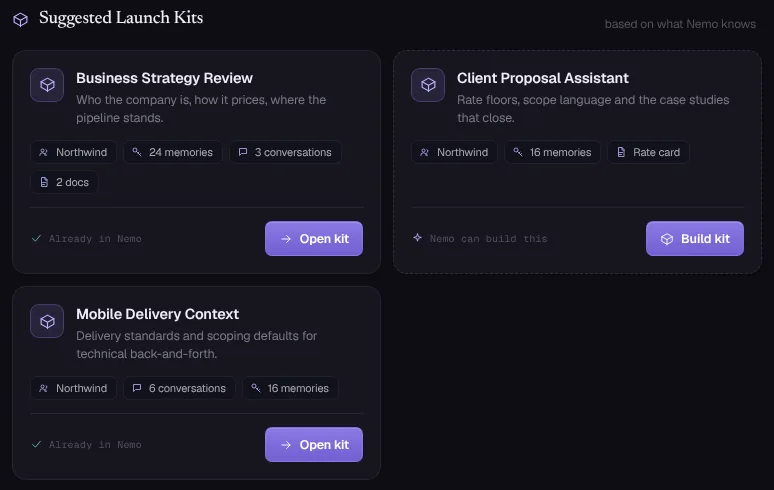
Context packaged for the job.
Nemo suggests kits from what it knows: the identity, the right memories, a few conversations and the documents that matter, built for a strategy review or a client proposal.
- Suggested from each identity
- Shows exactly what goes in
- Built in one click when it isn’t there yet
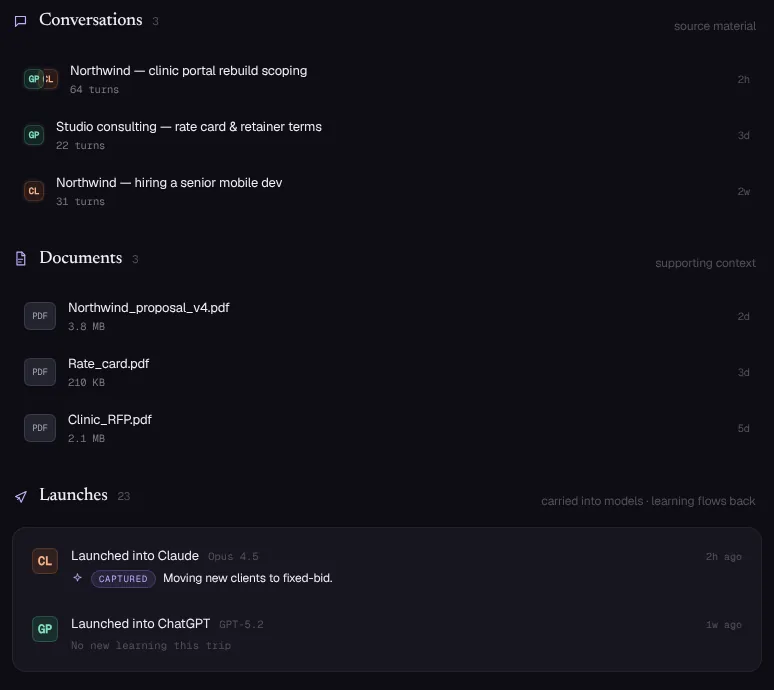
Where it went, and what came back.
Every launch is logged with the model and version it went to and the learning it brought back, beside the conversations the identity was built from.
- Each launch tagged with its model
- Captured learning shown inline
- Source conversations kept as reference
Why it’s built this way.
Why identities instead of one big memory?
Because you rarely want everything at once. An identity is a person, a company or a project, so you can bring exactly the context a conversation needs and leave the rest at home.
Which models does it work with?
It imports from ChatGPT, Claude, Gemini and Grok, or from an export file, and launches into any of them, down to the model version.
How does the context get so small?
Nemo sends what it has distilled (the summary, the memories and the key conversations) instead of raw transcripts, so years of history travel as a few thousand tokens.
Where does my data live?
On your device, encrypted. A launch sends a copy of what you chose into the model; the identity itself stays in Nemo.
How does it learn from a launch?
When you come back, Nemo shows what it picked up from that conversation. You keep or dismiss each item before it’s added to an identity.
Who built it?
Nicholas Howell, designed and built end to end. It’s how I’d build your product, too.